

Why Your uPVC Door Won't Lock (and How to Fix It)
By Iulian H., Lead Locksmith · Updated
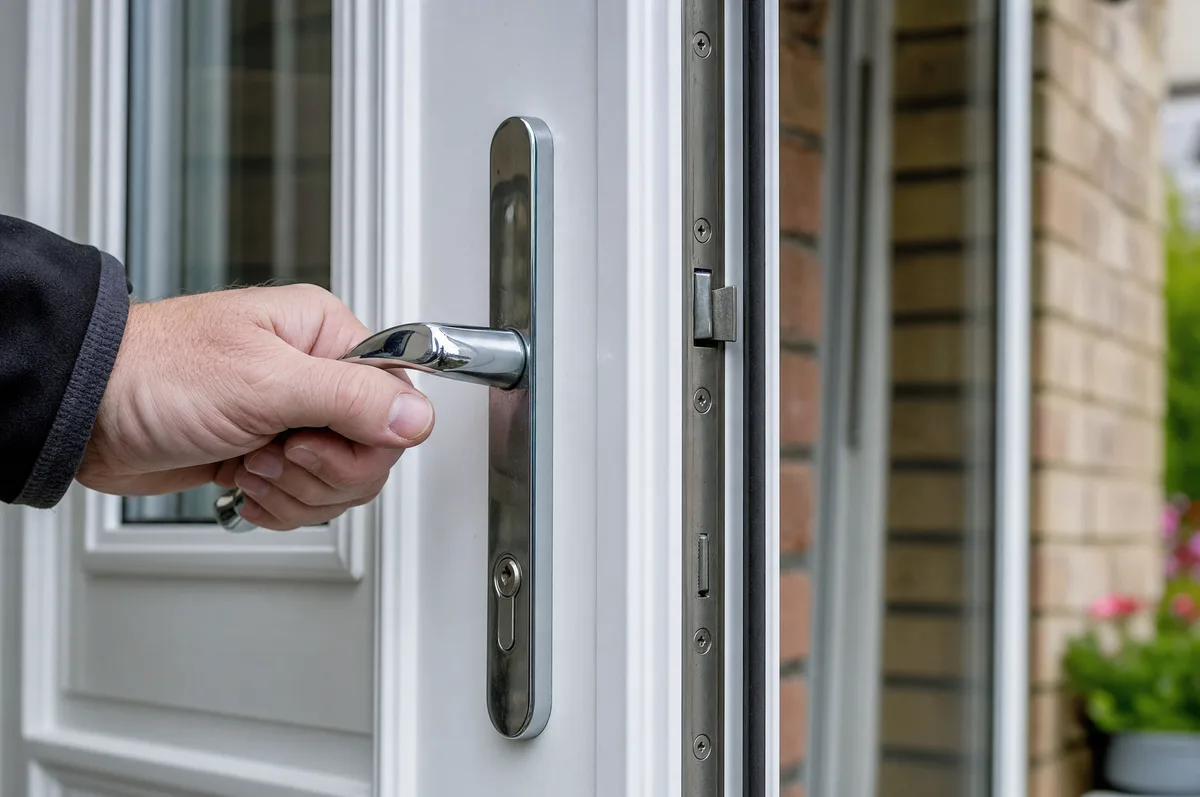
A uPVC door that won’t lock is almost always one of four faults: a dropped or thermally expanded door that has shifted out of alignment, a worn multipoint gearbox behind the handle, a faulty euro cylinder, or locking points that no longer reach their keeps in the frame. Before calling anyone, lift the handle firmly while pushing the door gently inward - if the hooks then engage, misalignment is the culprit and hinge adjustment usually cures it. If they do not, City Locksmith London repairs uPVC mechanisms from £99 and changes a cylinder from £69 labour, both excluding VAT, with no call-out fee.
Why a Door That Will Not Lock Is Worth Fixing Today
The front and back door are where burglars actually go. In the year ending March 2025, a door was the point of entry in around 77% of domestic burglaries in England and Wales where the offender got in. Within that, around 25% of entries were through a door that was simply not locked, and around 15% involved a forced lock (ONS, Crime Survey for England and Wales, Nature of Crime: burglary, Table 3b).
A door you cannot deadlock puts you in the first category by default. The multipoint hooks and the deadbolt are what make a uPVC door resist force; the latch on its own does not. Treat “it will not lock properly” as urgent rather than annoying.
What Actually Happens When You Lock a uPVC Door
Understanding the mechanism helps you diagnose the fault quickly. A uPVC door uses a multipoint locking system rather than a simple single-point latch. When you lift the door handle, a gearbox inside the door body drives multiple locking points - typically a latch, two or more hooks, and one or more roller cams - upward along a strip that runs the full height of the door. Turning the key then deadlocks everything in place.
Every one of those locking points must align precisely with a matching keep (also called a strike plate) on the door frame. If the door has moved even a millimetre or two out of position, or the gearbox can no longer drive the points home, the system fails.
What Causes a uPVC Door to Stop Locking?
1. Door Misalignment - Dropped Hinges or Thermal Expansion
This is the single most frequent cause. uPVC doors are heavy and the hinges bear that load every time the door swings. Over months and years, hinge screws loosen and the door drops fractionally. The locking points no longer meet their keeps squarely.
Thermal expansion compounds the problem. uPVC expands in warm weather - even 1-2mm of movement is enough to prevent the hooks from seating. Many homeowners notice the door locks fine in winter but fights them on hot summer days.
How to spot it: The door works fine when you test it with it held slightly open. Once it is fully closed against the frame, the handle is stiff or the key will not turn. Alternatively, you notice the door scraping at the bottom or along one edge.
2. Worn or Broken Multipoint Gearbox
The gearbox is the mechanical brain of the multipoint system. It converts the up-and-down movement of the handle into the motion that drives all the locking points simultaneously. Internal springs and cams wear down with repeated use.
Early signs include a grinding or crunching feeling when you lift the handle, a handle that no longer springs back, or a handle that lifts but moves nothing. At the end-stage, the gearbox breaks internally and the door either cannot be locked at all or cannot be opened.
How to spot it: The handle is stiff or grinding whether the door is open or closed. This rules out misalignment (which only causes stiffness when shut) and points to a mechanical failure inside the gearbox itself.
3. Faulty Euro Cylinder
The euro cylinder houses the keyway and drives the latch. A cylinder that is worn, has been damaged in an attempted break-in, or is simply old may allow the key to turn without engaging anything, or may prevent the key from turning at all.
Cylinder problems also arise when someone installs a cylinder that is the wrong size and it protrudes beyond the handle escutcheon - this creates a snapping risk and can interfere with the locking action.
How to spot it: The handle lifts normally and the locking points move, but the key will not turn, turns without resistance (spinning freely), or is very hard to insert and remove.
4. Locking Points Not Reaching the Keeps
Even when the gearbox and cylinder are working correctly, the locking points must have clear, correctly positioned keeps to engage with. Keeps can work loose from the frame over time, shift slightly, or corrode. One stubborn keep that sits a millimetre too far out can prevent the whole system from deadlocking.
How to spot it: You can see or feel one specific point on the door edge where resistance occurs. Pushing the door inward at that point while turning the key sometimes helps the hook seat - confirming the keep needs adjusting.
Causes and Fixes at a Glance
| Fault | Key symptom | DIY fix | When to call a locksmith |
|---|---|---|---|
| Door misalignment | Stiff only when shut; scraping edge | Tighten hinge screws; adjust flag hinges with Allen key | If hinges are corroded, broken, or the door has old butt hinges with no adjuster |
| Thermal expansion | Fine in winter, fails in heat | Lift handle firmly and push door inward while locking | If adjustment does not correct it seasonally |
| Worn gearbox | Grinding/loose handle; stiff open and shut | Lubricate with PTFE spray as a temporary measure | Always - gearbox replacement is not a DIY job |
| Faulty euro cylinder | Key won’t turn or spins freely | Try PTFE spray in keyway | If lubrication does not resolve it - cylinder replacement from £69 labour |
| Loose or shifted keep | Resistance at one specific point | Loosen keep screws, nudge into alignment, re-tighten | If the keep is damaged or the frame has moved significantly |
What Can You Check Yourself First?
Work through these steps in order before arranging a callout. Many uPVC locking problems clear without any specialist tools.
-
Test with the door open. Lift the handle and watch all the locking points move. If they move freely and spring back correctly, the gearbox is intact. The problem is likely alignment or the cylinder.
-
Lubricate the mechanism. Spray a PTFE or dry silicone lubricant onto the exposed locking points, hooks, and roller cams along the door edge. Work the handle several times to distribute the lubricant. Avoid oil-based sprays - they attract grit. Do not spray lubricant inside the euro cylinder keyway - use a dry graphite spray for the keyway only.
-
Check and tighten hinge screws. Open the door fully and inspect all hinges. Tighten any loose screws. A quarter-turn is often enough to lift the door back into square.
-
Adjust the flag hinges. Most uPVC doors fitted after 2000 have adjustable flag hinges with Allen key sockets. The vertical adjuster moves the door up or down; the lateral adjuster moves it toward or away from the frame. Small adjustments - half a turn at a time - can bring a dropped door back into alignment.
-
Try the lift-and-push technique. With the door closed, lift the handle firmly upward while pushing the door slightly inward toward the frame. If the lock then engages, the locking points are just short of their keeps - hinge adjustment or keep repositioning will cure it permanently.
-
Inspect and adjust the keeps. With a torch, check that each keep on the frame is flush, undamaged, and its screws are tight. Loosen the screws slightly, push the keep to where the locking point naturally wants to go, then re-tighten.
-
Test the cylinder separately. With the door open and the handle down (locking points retracted), insert the key and turn it. It should move smoothly. If it is stiff, sticky, or turns without resistance, the cylinder is the fault.
How Do You Know It Is the Gearbox, and Why Can’t You Fix It Yourself?
If the handle grinds, feels loose with no spring return, or moves without driving the locking points, the gearbox has failed mechanically. Unlike a cylinder, a gearbox cannot be lubricated back to health once the internal components have worn through or snapped.
Replacing a gearbox requires removing the door handle and panel, sliding out the multipoint strip, and fitting a compatible replacement - which means measuring the backset (distance from door edge to handle centre), the PZ measurement (centre-to-centre distance between handle spindle and cylinder), and the overall strip length. Getting these wrong means ordering the wrong part, which is why most homeowners prefer a locksmith to handle the measurement and fitting in a single visit.
City Locksmith London’s uPVC locksmith team carries common gearbox sizes and can usually replace a failed mechanism within a single callout, with mechanism repair and replacement from £99 (ex VAT).
When Is the Cylinder the Problem, and What Should You Fit Instead?
A euro cylinder that is worn, damaged, or the wrong size for the lock body should be replaced rather than forced. Replacement is also the right moment to upgrade to an anti-snap cylinder, from brands such as Ultion (Brisant-Secure), Avocet ABS or Mul-T-Lock.
Two points about the standard are worth knowing before you buy:
- What “3-star” means. The relevant standard is TS 007, currently TS 007:2014 + A2:2018, and it is a system rating. A 3-star cylinder on its own meets it; so does a 1-star cylinder paired with a 2-star security handle. Many cylinders also carry Sold Secure SS312 Diamond, which is a separate, complementary test. Check what your insurer’s wording actually asks for.
- Size matters as much as rating. A cylinder that sticks out beyond the handle escutcheon gives an attacker leverage regardless of what it is rated. It should be measured to the door and sit close to flush - no more than about 3 mm proud. This is the single most common fitting error we see on otherwise good cylinders.
Iulian H., lead locksmith at City Locksmith London, says: “We measure the cylinder to the door rather than fitting the nearest size, and we agree the price before we start - a correctly sized 3-star cylinder is worth more than an oversized one on paper.”
For step-by-step guidance on measuring and fitting a replacement cylinder yourself, see our detailed guide: How to Replace a Barrel Lock in Your uPVC Door.
If you would rather have a professional supply and fit the cylinder, our lock change service covers cylinder replacement from £69 labour (ex VAT), with no call-out fee and a free quote before we start.
What if the Door Is Locked and Will Not Open?
If the door is locked and the handle or key no longer operate it at all, you need emergency access. Forcing a uPVC door without the right technique causes significant frame and mechanism damage. City Locksmith London provides emergency locksmith cover across London with a 25-minute response, available 24 hours a day, 365 days a year. Emergency door opening starts from £79 (ex VAT) and we will not cause unnecessary damage to your door or frame.
How Do You Stop It Happening Again?
A small amount of routine care extends the life of a uPVC multipoint system considerably.
- Lubricate once or twice a year - PTFE or silicone spray on the locking points and strip, graphite spray in the keyway.
- Check hinge screws each spring and autumn - thermal cycling gradually works screws loose.
- Do not lift the handle hard from the outside - operating the handle correctly (always from the inside pull, or by gripping the handle properly from outside) reduces gearbox wear.
- Address stiffness early - a door that requires extra force to lock is putting excessive load on the gearbox. Fixing the alignment issue now avoids a gearbox replacement later.
Need a Locksmith for Your uPVC Door?
City Locksmith London covers all London postcodes, 24/7, with no call-out fee and fully insured, DBS-checked engineers. We carry parts for most common uPVC multipoint systems and can diagnose and fix the majority of locking faults in a single visit. For current pricing on mechanism repair, cylinder replacement, and emergency callouts, see our locksmith price list.
Contact us for a free quote, or if you are locked out right now, call us for emergency assistance - our emergency locksmith service covers Greater London with a 25-minute response. For non-urgent lock upgrades, you can also explore our door lock installation service if a full lock replacement is the best solution for your door.