

How to Unlock a Door Without Damaging It: A UK Homeowner's Guide
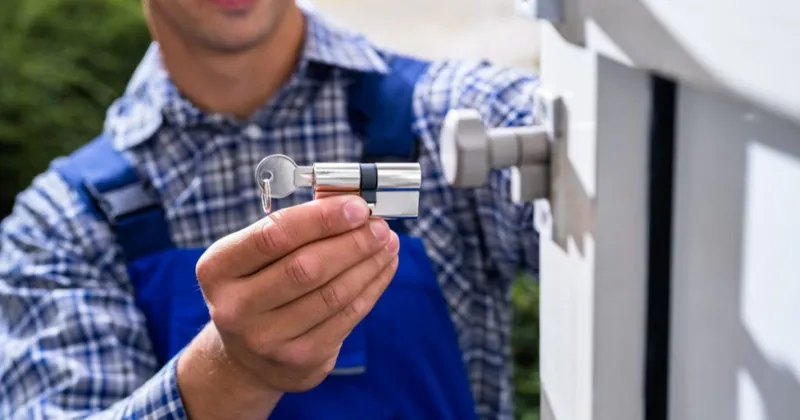
If you are locked out of your house, start by checking every door and window for an unlocked entry point, then contact anyone with a spare key. If neither option works, call a professional, insured emergency locksmith - they can open most UK residential doors non-destructively in under 15 minutes. Forcing or breaking the door should be a last resort only: frame damage is expensive, and it may affect your home insurance claim.
Locked Out? Do Not Damage the Door
The instinctive response to being locked out - shoulder charge, kick, or smash - is almost always the wrong one. It is expensive, often ineffective against quality locks, and can cause significant structural damage that costs far more to repair than a professional locked-out-of-house service.
This guide covers what actually works, what does not, and when the smartest move is to call an emergency locksmith in London.
Important: All methods described here are for gaining access to your own property only. Using these techniques on a property you do not have the legal right to access is a criminal offence under the Criminal Law Act 1977.
Step 1: Check the Obvious Entry Points First
Before trying anything else, take 60 seconds to check:
- All external doors - back door, patio door, French doors, garage entry
- Accessible ground-floor windows - a tilted window you forgot about
- Your pockets and bag - keys turn up in unexpected places
- Neighbours - a spare key held by a trusted neighbour is the easiest solution
Rushing straight to locksmith techniques when a back door is unlocked wastes both time and money. Stay calm: panic causes you to miss the obvious.
Step 2: Contact Someone with a Spare Key
- Family or friends - the fastest fix if they can reach you quickly
- Your landlord or letting agent - if you rent, they are legally required to maintain access. Note that this may not be available outside office hours
- A neighbour you trust - many people leave a spare with a nearby neighbour
If you rented recently and suspect your landlord changed the locks unlawfully, Citizens Advice can help - but that is a separate legal matter from a straightforward lockout.
Step 3: Assess Before You Act
If no spare key is available, answer these questions before touching anything:
- What type of lock is it? A spring latch behaves very differently from a deadbolt or a mortice lock.
- How urgent is the situation? If someone inside needs immediate help, call emergency services - not a locksmith.
- What tools do you have available?
- What is the weather and time of day? Night-time, cold, or vulnerable circumstances all affect the right decision.
Taking a minute to think clearly can save you considerable time, money, and frustration.
Which DIY Techniques Can Actually Work?
Credit Card on a Spring Latch
Works on: Simple spring latch locks (the type that clicks shut automatically when the door closes)
Does NOT work on: Deadbolts, mortice locks, multi-point locking systems, or any lock with a deadlatch anti-shim plunger
How it works:
- Choose a flexible card you can afford to sacrifice - it will get scratched or bent
- Insert the card into the gap between the door and the frame, just above the latch
- Angle the card toward the latch and bend it toward the door
- Push the door while working the card until the latch retracts
The limitation: Most UK front doors do not use a simple spring latch. Modern UPVC doors and timber front doors with British Standard locks use multi-point or deadbolt systems where this technique cannot work. Even on basic latches, an anti-shim deadlatch plunger (a small secondary pin next to the main latch) blocks this method.
Letterbox Access
Some doors - particularly older UK properties with lever handles rather than knobs - can be opened by passing a long, hooked tool through the letterbox to turn the inside handle. This is one of the techniques professional locksmiths use.
Risk: Attempting this with improvised tools risks scratching the door interior and may not work on doors with anti-fishing letterbox guards (which most modern security-rated doors include).
What About Bump Keys and Lock Picks?
These are legitimate professional tools that require specific equipment and significant practice. A bump key or pick in untrained hands is very unlikely to open a modern lock quickly, and clumsy attempts can jam the cylinder, making the locksmith’s job harder and more expensive. They are not recommended as DIY approaches.
Techniques That Are Unlikely to Work (and May Cause Damage)
Forcing the Door
Kicking or shouldering a door engages the door frame rather than the lock. A quality deadbolt set into a properly reinforced frame will resist enormous force. What gives first is typically the door frame itself - which costs hundreds of pounds to repair properly and leaves the property unsecured until the work is done.
Removing Hinges
On outward-opening doors with exposed hinges, removing the hinge pins in theory allows the door to be lifted away from the hinge side. However, most UK exterior doors open inward, and any outward-opening door with exposed hinges should have hinge bolts fitted to prevent exactly this. In practice, this almost never works on a well-fitted UK front door.
Breaking a Window
Breaking glass creates a safety risk, an expensive repair job, and may alert neighbours or trigger a monitored alarm. Unless there is a genuine emergency - a child or vulnerable person at risk inside - this is rarely the right call. The cost of glazing repair usually exceeds the cost of a locksmith by a significant margin.
How a Professional Locksmith Opens a Door Non-Destructively
Understanding what a locksmith actually does helps you see why calling one is usually faster and cheaper than forcing entry yourself.
Lock Picking
The most common NDE method. A tension wrench applies light rotational pressure to the cylinder while a pick manipulates the internal pins one at a time (single-pin picking) or in a rapid raking motion. When the pins align correctly, the cylinder turns. This leaves the lock completely undamaged and takes a trained locksmith a few minutes on most standard locks.
Lock Bumping
A bump key - cut to the maximum depth for a given key profile - is inserted and struck sharply while applying turning pressure. The impact momentarily displaces all pins simultaneously, allowing the cylinder to turn. Effective on pin tumbler locks; not effective on high-security locks with anti-bump features.
Decoding and Impressioning
For more complex jobs, a locksmith may decode the lock - measuring pin depths from the outside to determine the correct key code - and then cut a working key on the spot. Impressioning involves inserting a blank key and making incremental cuts based on the marks left by the binding pins until it turns.
Bypass Tools
Mortice lock decoders, latch sliders, and letterbox tools allow a locksmith to bypass the locking mechanism rather than picking it. A long-reach letterbox tool can turn an interior handle from outside in seconds on suitable doors.
When Must the Lock Be Drilled?
Drilling is a last resort, used only when:
- The lock is severely damaged or a key is broken and jammed
- It is a very high-security cylinder with anti-pick, anti-bump, and anti-drill features and no other method works
- The customer agrees to proceed after being told the cost of lock replacement
A reputable locksmith always tells you before drilling and provides a quote for the replacement lock. At City Locksmith London, destructive entry is used in a small minority of jobs - the lock is replaced at the same visit.
When to Call a Professional Locksmith
Call an emergency locksmith immediately when:
- The lock is a deadbolt, mortice lock, multi-point UPVC system, or electronic lock
- You have attempted a DIY method without success
- You are in an unsafe location or it is late at night
- There is a child, elderly person, or pet inside
- The lock itself appears damaged, jammed, or malfunctioning
- The property has a high-security lock system
- You have already been outside for more than 15 minutes in poor weather
A professional locksmith carries specialist tools that allow non-destructive entry in the vast majority of situations. A trained locksmith can typically open a residential door in 5 to 15 minutes from arrival, with no damage to the lock or door.
After gaining entry, a locksmith can also:
- Replace any lock that requires it - from stock carried in the van
- Cut new keys on-site
- Identify the cause of the lock failure
- Advise on preventing the same situation recurring
- Upgrade your lock security while they are there
How Much Does a Locksmith Lockout Callout Cost?
UK locksmith callout prices typically range from around £79 to £150 for a residential lockout, depending on the lock type, time of day, and location. Night-time and bank holiday rates are higher with some firms - always ask for a fixed, all-inclusive quote before agreeing to any work.
City Locksmith London charges:
- Emergency door opening: from £79 (ex VAT)
- Lock change (labour): from £69 (ex VAT)
- Lock re-key: from £55 (ex VAT)
- Repair/fix mechanism: from £99 (ex VAT)
There is no call-out fee, and a free quote is provided before any work begins. For a full breakdown, see our locksmith price list.
How to Avoid Locksmith Scams
Unfortunately, rogue traders advertise very low prices (sometimes £49 or less) and then add unexpected charges once they arrive. To protect yourself:
- Use a professional, insured locksmith - non-destructive entry specialists are recommended by Police and Neighbourhood Watch
- Ask for a fixed, all-in quote before they start
- Be wary of any advertised price under £60 for a London callout
- Check Google reviews and look for a local, traceable business address
City Locksmith London has no hidden fees and provides transparent, fixed pricing upfront.
Preventing Lockouts in Future
The best solution to a lockout is avoiding one:
- Leave a spare key with a trusted neighbour or family member - not under a doormat or in an obvious hiding place
- Fit a police-approved key safe - a locked box mounted to the wall, rated and certified for external use
- Consider a smart lock - many models allow entry via a PIN code or phone app as a backup when keys are lost
- Get a landlord or property manager agreement - if you rent, know who to call out of hours
- Check your home insurance - some policies include locksmith cover; keep the invoice if you need to claim
Locked Out Right Now?
City Locksmith London provides fast, damage-free emergency locksmith response across all of Greater London - available 24 hours a day, every day of the year, including bank holidays. Our fully insured, DBS-checked engineers aim to reach any London location within 25 minutes. There is no call-out fee, and we provide a free quote before any work begins.
Contact a locksmith now or view our full locksmith price list for transparent, upfront pricing.