

How Do Burglars Break Into Houses in London?
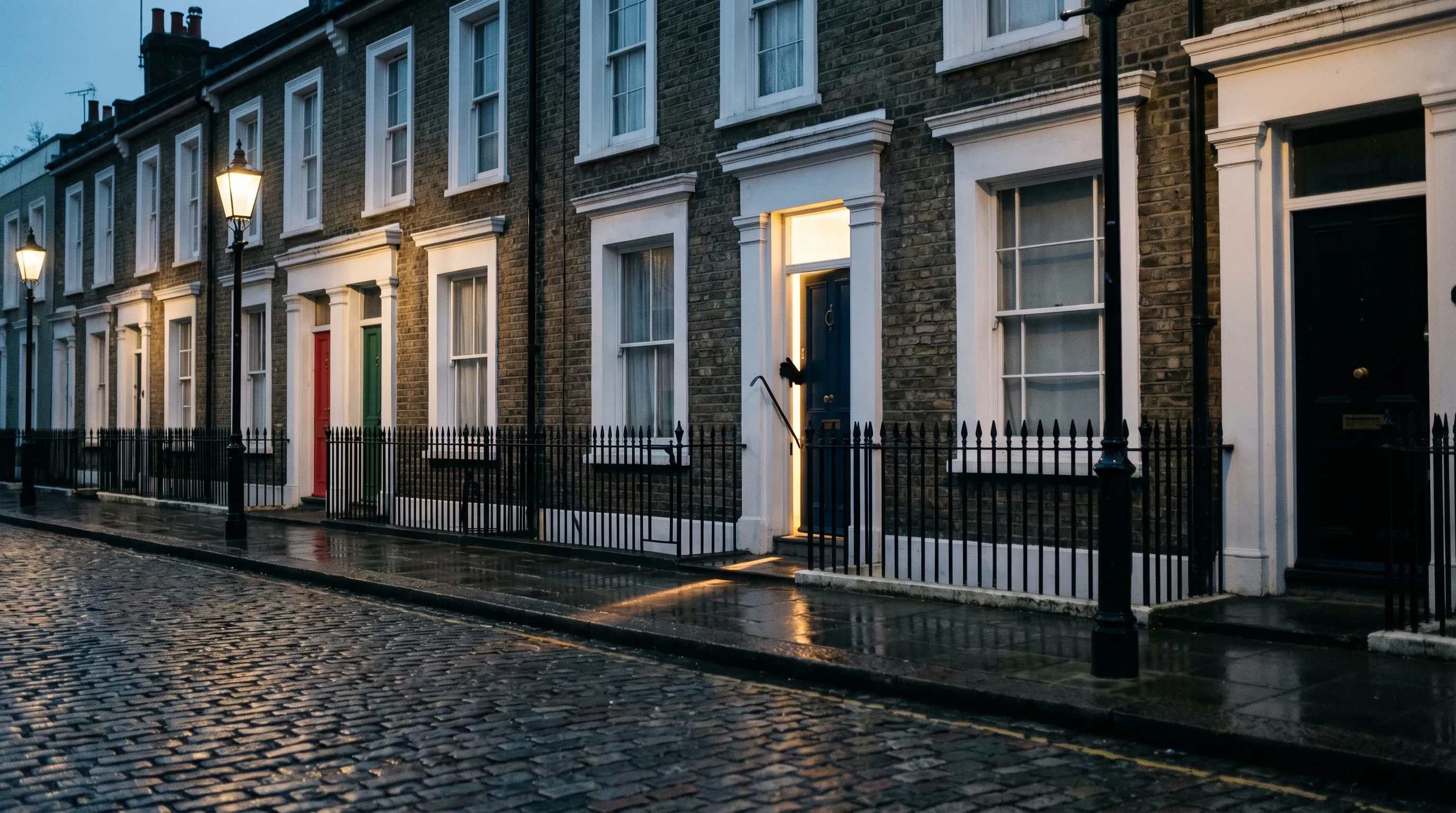
Burglars enter around 70% of UK homes through a door rather than a window, with the front door the most common target. The dominant forced-entry method on modern uPVC and composite doors is lock snapping - snapping a standard euro cylinder in under a minute using pliers. Other methods include brute-force kicking, letterbox fishing, lock bumping, and exploiting unlocked or poorly latched windows. The single biggest prevention step is replacing any standard euro cylinder with an anti-snap TS 007 3-star or Sold Secure SS312 Diamond-rated cylinder - this eliminates the most common attack method entirely.
Why Understanding Break-In Methods Matters
When people picture a burglary, they tend to imagine a smashed window or a pried-back door in the dead of night. The reality, based on Crime Survey for England and Wales (CSEW) data and Metropolitan Police reporting, is quite different - and understanding how break-ins actually happen is the most direct route to preventing them.
London sees more burglaries than any other UK region. The Metropolitan Police recorded 52,836 burglary offences in the capital in the year to March 2024. That is roughly 145 break-ins every single day across Greater London, and it is almost certainly an undercount, since many residential burglaries go unreported.
This guide covers every major entry method used by burglars in London, the defences that work, and the practical steps you can take this week to harden your home. It is framed entirely around prevention - nothing here helps a burglar; everything here helps you stop one.
How Burglars Really Get In: The Data
Doors, Not Windows - The Founding Statistic
According to CSEW Nature of Crime tables, around 70% of residential burglaries involve entry through a door. Windows account for roughly 30%. This is the opposite of what most homeowners assume, and it matters because it tells you where to direct your security budget first.
Of all door entries, around 62% happen through the front door, 26% through the back door, and 10% through a side door or patio, according to CSEW data cited in multiple police force guidance documents.
The Unlocked Door Problem
Roughly one in four UK burglaries involves no forced entry at all. The burglar simply walked in through a door or window that was left unlocked or open. This figure has remained consistent across years of CSEW data and represents tens of thousands of entirely preventable crimes each year.
In London, the proportion can be higher in flats with shared building entrances, where residents leave communal doors on the latch for deliveries or prop them open during hot weather. A compromised communal entrance gives access to every flat in the building.
How Many Burglaries Are Attempted vs. Successful?
The CSEW also notes that between a third and two-fifths of burglary incidents are unsuccessful attempts - the offender was unable to gain entry. This is an important figure because it shows that resistance works. Security measures do not need to be impenetrable; they just need to be enough to make an opportunistic burglar move on to an easier target.
The Six Main Methods Burglars Use to Force Entry
Method 1: Lock Snapping
Lock snapping is the dominant forced-entry method on uPVC and composite doors. The burglar grips the exposed portion of the euro cylinder with pliers and applies rotational force, snapping the cylinder at its structural weak point near the central fixing screw. Once snapped, the locking mechanism is exposed and the door opens without a key.
The entire process takes under a minute - in some demonstrations, under 15 seconds. It requires no specialist skill and no specialist tools; a pair of pliers or a mole wrench from any hardware shop is sufficient.
Lock snapping is a well-documented technique used against older or standard (non-anti-snap) euro cylinders, and it is a recognised forced-entry method in police guidance and security industry literature. Anti-snap cylinders certified to TS007 3-star or Sold Secure Diamond defend against it.
The vulnerability affects any uPVC or composite door fitted with a standard euro cylinder that lacks an anti-snap core. This includes a very large proportion of the housing stock in London - particularly properties built or refitted between the 1990s and the mid-2010s before anti-snap products became standard.
The fix: Replace with a TS 007 3-star cylinder (the highest British Standard for standalone cylinder resistance) or a Sold Secure SS312 Diamond-rated cylinder. Both are tested and certificated against snapping, drilling, picking, and bumping. Our residential locksmith service covers cylinder replacement across all London boroughs.
For a full explanation of this attack and the exact products to fit, see our guide to high-security locks.
Method 2: Kicking and Shouldering (Brute Force)
After lock snapping, brute force is the next most common forced-entry method. The burglar kicks near the lock - not at the lock itself, but at the door frame around the strike plate, which is typically the weakest point. On older timber doors, the frame can split with a single well-placed kick.
This method is louder and more conspicuous than lock snapping, so burglars using it tend to work faster and in less observable locations - rear doors, side passages, and properties set back from the street.
What makes a door vulnerable to kicking:
- Single-point locks where all force concentrates at one strike plate
- Weak or rotten door frames, particularly around the strike plate mortice
- Short, inadequate screws on the strike plate (25mm screws in a softwood frame offer almost no resistance)
- Old, warped doors that no longer sit tightly in the frame
The fix: Fit a multi-point locking system so force is distributed across three or more locking points rather than one. Reinforce the strike plate with 100mm (4-inch) screws that bite into the structural door frame rather than just the casing. On timber doors, a BS 3621 five-lever mortice deadlock - the standard required by most UK home insurers - provides significantly more resistance than a standard nightlatch alone. Our door lock installation service covers multi-point locks, mortice deadlocks, and reinforced strike plates.
Method 3: Letterbox Fishing
Letterbox fishing (also called “letterbox attack”) involves the burglar pushing a long, hooked tool through the letterbox to:
- Hook keys left on a hall table or key rack near the door
- Operate the internal thumb-turn on a nightlatch to open the door from inside
- In rare cases, reach the internal handle of a lever-handle nightlatch
It is a quiet, low-damage method that leaves no evidence of forced entry on the door itself, which can complicate insurance claims if you cannot prove how entry was made. It is particularly common in London’s terraced streets, where Victorian and Edwardian front doors often have the letterbox positioned close to the lock and handle.
The fix: Fit a letterbox cage or restrictor - a metal box that mounts on the inner face of the door, catching post and preventing any tool from reaching through to the lock side. Move any key storage well away from the hallway. If your current nightlatch has an internal thumb-turn, consider a locksmith assessment of whether it can be seen or reached through your letterbox.
Method 4: Lock Bumping
Lock bumping uses a specially cut “bump key” inserted into a pin tumbler cylinder. A sharp strike on the key causes the pins to momentarily jump, and if rotational force is applied at that instant, the cylinder opens. It works on most standard pin tumbler locks and requires moderate skill - more than lock snapping, but within reach of a determined burglar.
Bump keys are not commercially available to the public in the UK but are not hard to obtain; the technique is well-documented. It is less common as a primary method than snapping or brute force, but it is a real risk on older cylinders, particularly on properties that have not had their locks upgraded in over a decade.
The fix: Anti-bump cylinders use security pins that are highly resistant to bumping. The TS 007 3-star cylinders specified above for anti-snap protection are also anti-bump rated. If your property has a five-lever mortice deadlock, check it carries the BS 3621 mark - these are tested to resist picking and manipulation techniques including bumping.
Method 5: Window Entry
When burglars target windows, they typically choose ground-floor windows at the side or rear of the property - areas with least visibility to neighbours and passers-by. The most common approach is simply forcing a window that is ajar or has a weak catch. According to police guidance, fewer than 3% of burglaries involve forcing a properly locked, closed window - smashing glass is noisy and creates evidence.
Particular weak points:
- Ground-floor rear windows left on the “night latch” position (slightly open for ventilation) - accessible from outside with a simple tool
- Old sash windows with no lock beyond the original catch, which can be vibrated open
- Sliding patio doors without an anti-lift device fitted - these can be lifted clean out of the track without breaking the lock
- Conservatory doors and windows - often fitted with lighter-duty hardware than the main house doors
The fix: Fit window locks to any accessible window. For sash windows, dual screw locks or sash stops prevent the window being opened beyond a small ventilation gap. For sliding patio doors, fit an anti-lift bar or block in the track. Our security door and window lock guide covers every lock type for every window and door configuration.
Method 6: Opportunistic and No-Force Entry
A significant number of London burglaries are not planned. An opportunistic burglar walks down a street, tests door handles, spots an open first-floor window, or follows a delivery driver into a shared building entrance. The decision to attempt a break-in is typically made in under 30 seconds, based on how easy access appears and how likely observation is.
This category includes:
- Unlocked or unlatched front and rear doors
- Ground-floor windows left open or on ventilation latches
- Communal building doors left propped open
- Garage-to-house connecting doors that are hollow or poorly locked
- Sheds and outbuildings used as a staging post to collect tools for a follow-on attack on the main house
The fix for this category costs nothing: lock every door and window every time you leave, even for a short trip. This single behaviour change would prevent approximately one in four UK burglaries.
Methods vs. Defences: Quick Reference
| Method | Typical target | Time to entry | Defence |
|---|---|---|---|
| Lock snapping | uPVC/composite doors with standard euro cylinder | Under 60 seconds | TS 007 3-star or SS312 Diamond anti-snap cylinder |
| Kicking/shouldering | Single-point locks; weak frames | Under 30 seconds | Multi-point lock; 100mm strike plate screws; BS 3621 mortice |
| Letterbox fishing | Nightlatch doors with letterbox near lock | 1-3 minutes | Letterbox cage; move keys; no thumb-turn in reach |
| Lock bumping | Standard pin tumbler cylinders | 1-5 minutes | Anti-bump (TS 007 3-star) cylinder |
| Window forcing | Ground-floor accessible windows | 1-2 minutes | Fitting window locks; closing before leaving |
| No-force entry | Any unlocked door or window | Seconds | Consistent locking habit; no leaving doors on latch |
When Do Burglaries Happen in London?
Contrary to the popular image, most residential burglaries in London happen during the day - typically between 10am and 3pm on weekdays, when properties are most likely to be empty. Research cited by Metropolitan Police and other UK forces indicates that around 40% of break-ins occur in the late afternoon window between 3pm and 5pm, when offenders expect occupants to be returning from work or school runs but properties may still be briefly unoccupied.
Night-time burglaries exist but are less common for residential properties. They are more associated with commercial premises.
Seasonal patterns:
- October to January: Peak months, shorter days give more cover during early evening
- Summer: Secondary peak due to holiday absences and increased likelihood of open windows
- School holidays: Rise in daytime burglaries as the pattern of who is home changes
One important note from the CSEW data: around one in three burglary victims is at home during the break-in but is unaware it is happening - typically when entry is through a rear or side access point while the occupant is in a front room or upstairs.
What Actually Works: The Evidence-Based Prevention Checklist
Police guidance and academic research converge on the same core finding: no single measure is sufficient, but a layered combination delivers dramatically better protection. Properties with no security measures in place are estimated to be around ten times more likely to be burgled than those with basic security. The combination of door locks, window locks, and a visible alarm together raises that deterrent multiplier further.
Priority 1: Upgrade your door lock (most impactful single action)
- Replace any standard euro cylinder with a TS 007 3-star or SS312 Diamond anti-snap, anti-bump cylinder - this eliminates the most common forced-entry method
- Ensure any timber front door has a BS 3621 five-lever mortice deadlock (required by most UK home insurers as well as being genuinely secure)
- Check that your door operates a multi-point locking system - if it does not, consider upgrading
Our residential locksmith service covers full security assessments, anti-snap cylinder fitting (from £69 labour), multi-point lock fitting, and BS 3621 mortice installation (from £89/hr labour) across all London boroughs, with no call-out fee and free quotes.
Priority 2: Secure the letterbox
- Fit a letterbox cage or restrictor on the inner face of the door
- Move any key storage at least 2 metres from the front door
- If your nightlatch has a visible thumb-turn that can be reached through the letterbox, ask your locksmith to assess the risk
Priority 3: Lock windows and patio doors
- Fit window locks to all accessible windows, particularly ground floor and any reachable from a lean-to, bay, or flat roof
- For sash windows, fit sash stops or dual screw locks
- Fit an anti-lift device in the track of any sliding patio door
- Close and lock all windows before leaving, even for short periods
Priority 4: Visible deterrents
- Install motion-activated exterior lighting at front and rear - an illuminated burglar is a deterred burglar
- Fit a visible alarm bell box at the front and rear of the property, even if you also have a monitored system
- Consider a video doorbell for the front door - this records approach footage and can alert you in real time
Priority 5: Reduce opportunity
- Do not leave keys anywhere near the front door or within reach of the letterbox
- Keep a clear sightline to your front door - high hedges and recessed porches provide cover for burglars
- Use timber fencing and thorny planting at the rear for a physical barrier
- Use gravel on paths and driveways - it makes a quiet approach far harder
- Register valuables on the Immobilise Property Register (free) so police can reunite them with you if recovered
London-Specific Considerations
Flatted Properties and Shared Entrances
London has a higher proportion of flats and converted houses than almost anywhere else in the UK. These present specific security challenges:
- Communal front doors: Often propped open for deliveries or have degraded intercom systems. A compromised communal entrance gives every burglar access to every flat in the building.
- Multiple keyholders: More residents means more keys in circulation. Lost or copied keys can circulate without any individual resident knowing.
- Upper-floor complacency: Residents above the ground floor sometimes neglect lock security because they feel less vulnerable. A compromised communal entrance eliminates that protection entirely.
- Roof terrace and balcony access: In London mansion blocks and modern developments, roof terraces and balconies on upper floors can provide access between properties or from adjacent flat roofs.
If you live in a flatted property, raise communal entrance security with your landlord, managing agent, or residents’ association. The fix is rarely expensive - often a new self-closing mechanism and a working intercom is sufficient.
Car Key Burglary
London has seen a sustained rise in car key burglary - where the primary target is not the contents of the house but the car keys inside it, and therefore the car outside. Thieves typically enter quickly through a vulnerable front door, retrieve keys from a hallway hook or bowl, and leave within 30-60 seconds.
Prevention mirrors the advice above: a letterbox cage prevents fishing for visible keys; an anti-snap cylinder on the front door removes the easiest forced-entry route; and keeping car keys in a signal-blocking pouch (Faraday pouch) prevents relay attacks on keyless entry systems while the key is inside your home.
After a Break-In: Immediate Steps
If your property has been broken in to, the priority is securing it again before addressing contents. A broken or compromised lock leaves the property at risk of a second entry - a pattern that does occur, particularly when burglars believe the job was incomplete.
Our emergency break-in repair service covers same-day door and lock repair across all London postcodes, with a 25-minute average response time, available 24 hours a day. We can replace snapped cylinders, repair or replace damaged door frames and strike plates, fit temporary boarding if the door itself is damaged, and complete a full security upgrade on the same visit.
Lock change labour starts from £69. Emergency door opening from £79. Mechanism repair from £99. Free quote on arrival - contact us any time.
Frequently Asked Questions
See the FAQ section below for direct answers to the most common questions about how burglars break in and what stops them.
Summary: The Most Important Things to Do Today
- Test all your door locks. If your uPVC or composite door has a standard euro cylinder with a visible fixing screw, it is vulnerable to snapping. A locksmith can confirm this in minutes.
- Fit a letterbox cage if your letterbox is within reach of the lock or handle.
- Check your windows. Fit locks to any accessible window that does not already have one.
- Move your keys away from the front door.
- Consider a visible alarm - even the presence of a bell box deters opportunistic burglars.
For a professional security assessment of your London home, contact City Locksmith London - we cover all London postcodes, operate 24/7, and offer free quotes with no call-out charge.
If your key has broken in the lock rather than been snapped by a burglar, our guide to getting a snapped key out of a lock covers the safe DIY and professional options.