

Locked Out of a Safe? Here's What to Do
By Iulian H., Lead Locksmith · Updated
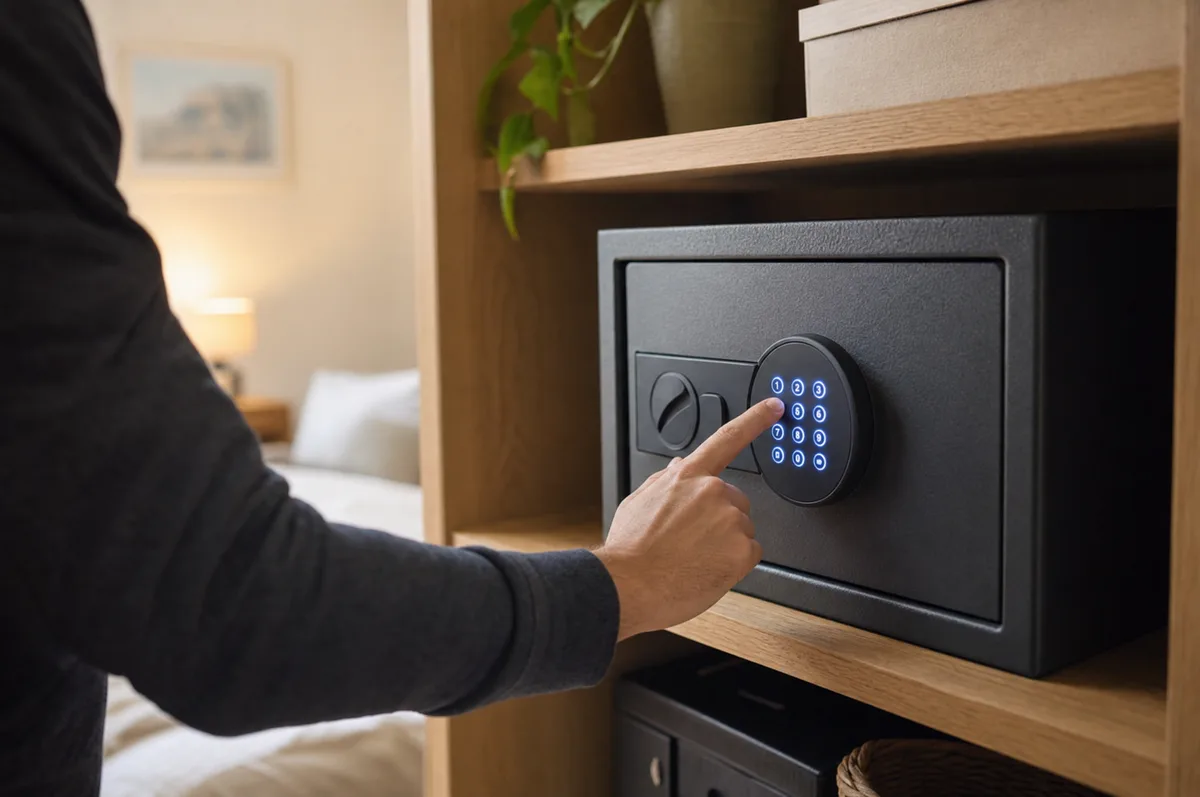
If you are locked out of a safe, work through the simple checks that match your safe type first - a dead battery, a hidden override key, or a manufacturer reset code. If none of those resolve it, or the lock is jammed or damaged, call a professional safe locksmith rather than forcing it: an amateur attempt can damage a safe beyond economical repair and can cost it the cash and fire ratings it was certified to. City Locksmith London opens safes across Greater London 24/7, non-destructively wherever possible, with a free quote before any work starts.
Why Do Safes Stop Opening?
Safes fail to open for a small number of well-understood reasons. Identifying which applies to your situation lets you work through the right checks quickly and avoid making the problem worse.
The four most common causes are:
- Dead or low battery - the most frequent cause of electronic safe lockouts
- Forgotten combination or PIN - equally common, especially on safes used infrequently
- Lost override or emergency key - leaves no quick self-help option for most models
- Jammed or faulty lock mechanism - bolts stuck, solenoid failed, or worn dial
What Should You Check First, by Safe Type?
Digital Safe with a Keypad - Dead or Low Battery
Most keypad safes give early warning of a dying battery through slower response, extra beeps, or a flashing display. If the keypad is completely unresponsive, the battery is the most likely culprit - not a fault with the lock itself.
What to try:
-
Check whether your model has a battery tray behind or below the keypad face. Many designs allow battery replacement from outside the safe. Swap in fresh alkaline batteries of the correct size and re-enter your code.
-
If the battery is internal (behind the door) and the keypad is dead, look for a pair of external power contacts - usually two metal terminals on the front face, below the keypad. Hold a fresh 9V battery firmly against those contacts while you enter your code. The external power is only needed for the second or two it takes to unlock; once the bolts retract, you can open the door and replace the internal battery.
-
If the keypad responds but rejects your correct code, leave the safe alone for a few minutes. Most electronic safes impose a penalty delay - typically three to five minutes - after three or four wrong entries. Continuing to press keys extends the lockout period on many models.
What does not help: entering random codes, banging the door or repeatedly pressing the keypad during a penalty lockout.
Key-Operated Safe - Lost or Missing Key
Key-operated safes, including many small home safes and filing cabinet safes, have no electronic override. If the key is lost, your options are:
-
Check whether the safe has a registered key number stamped on the lock or the original documentation. Some manufacturers will cut a replacement key once ownership is verified - contact them with the model and serial number.
-
A safe locksmith may be able to pick the lock or decode and cut a new key from the cylinder, depending on the lock type. This is often possible without damage to the safe.
-
Do not force the handle. Forcing a key-operated bolt work can jam the mechanism permanently, making professional opening significantly harder and more expensive.
Combination Dial Safe - Forgotten Combination
Traditional dial safes (spin-to-open combination locks) are very secure and offer no battery-based workaround. If you have forgotten the combination:
-
Check the original documentation. Manufacturers and dealers often supply the combination on a sealed card. Safe installers sometimes register the combination with the manufacturer on your behalf.
-
Contact the manufacturer’s customer service team. They may be able to verify ownership and supply the combination, though this process can take time.
-
A professional safe engineer can manipulate a combination lock open without drilling on most standard domestic and commercial models. This takes patience and skill, but it leaves the safe and lock intact.
Electronic Safe with a Known Code That Still Won’t Open
If you are certain your code is correct but the safe will not open, the fault is likely mechanical rather than electronic:
- Bolt tension: The locking bolts may be pressing hard against the door frame. Apply gentle inward pressure to the door while entering your code, to relieve tension on the bolts.
- Solenoid failure: The internal motor that retracts the bolts may have failed. This requires professional attention.
- Damaged internal mechanism: If the safe has been moved, dropped, or tampered with, internal components may have shifted. Do not apply force.
Why Your Safe’s Rating Changes the Right Approach
Before anyone drills anything, it is worth knowing what your safe is certified to hold - because that rating is what a destructive opening puts at risk.
UK insurers work from two standards. Lighter security cabinets are tested to BS EN 14450 and graded S1 or S2. Heavier safes are tested to BS EN 1143-1 and graded as Eurograde 0 upwards. Each grade carries an indicative overnight cash rating, with a valuables rating conventionally set at ten times the cash figure.
| Grade | Standard | Indicative cash rating | Indicative valuables rating |
|---|---|---|---|
| S1 | BS EN 14450 | £2,000 | £20,000 |
| S2 | BS EN 14450 | £4,000 | £40,000 |
| Eurograde 0 | BS EN 1143-1 | £6,000 | £60,000 |
| Eurograde I | BS EN 1143-1 | £10,000 | £100,000 |
| Eurograde II | BS EN 1143-1 | £17,500 | £175,000 |
| Eurograde III | BS EN 1143-1 | £35,000 | £350,000 |
Indicative figures as published by Howden Insurance. Ratings vary between insurers, and assume the safe is correctly installed and anchored - always confirm the limit with your own insurer or broker.
The lock is graded separately, under BS EN 1300, in four classes from A to D. Class A is the entry level fitted to S1, S2 and Eurograde 0 to II safes; higher grades require Class B or C locks, sometimes two of them. This matters practically for two reasons:
- The lock is not the weak point. EN 1143-1 testers are not allowed to attack the lock when they test the body, precisely because the lock is certified separately. A “cheap” way in usually does not exist.
- A drilled safe is no longer the safe that was certified. Unless it is repaired to the manufacturer’s specification with the correct parts, a destructively opened safe should not be assumed to still meet its cash or fire rating. Tell your insurer if this happens.
If you do not know your grade, look for a certification plate inside the door or on the door edge, and note the serial number while you are there.
When Should You Call a Professional Safe Locksmith?
You need a professional when:
- Self-help checks have not resolved the problem after one careful attempt
- The lock mechanism is visibly jammed, damaged or has been tampered with
- The safe holds time-sensitive documents or items and you cannot wait for manufacturer support
- You have lost the override key and the battery is dead - with no external power contacts
- The safe is a high-security or commercial-grade model that requires specialist tools
Our safe opening service in London covers all safe types across Greater London, 24 hours a day, with non-destructive opening wherever possible. For an urgent lockout our emergency locksmith team responds fast, and for business premises our commercial locksmith London service handles office, server room and high-value storage safes.
What Does a Safe Locksmith Actually Do?
A qualified safe engineer follows a structured process:
- Identification - they confirm the make, model and security grade of the safe to select the right approach.
- Non-destructive attempt first - for combination safes, lock manipulation; for electronic safes, electronic bypass where possible. Non-destructive methods preserve the safe’s fire rating, insurance certification and overall value.
- Controlled opening as a last resort - if non-destructive methods are not possible, a targeted controlled entry is carried out with minimal damage. The locksmith explains this before starting and advises on repair or replacement of the lock afterwards.
- Documentation - a reputable locksmith records the job for audit purposes and may ask for proof of identity and ownership before opening any safe. This protects you as much as it protects against misuse.
Iulian H., lead locksmith at City Locksmith London, says: “On a safe we always try non-destructive opening first, and we agree the price and explain what a controlled opening would mean before anyone picks up a drill.”
City Locksmith London charges no call-out fee, provides a free fixed quote before any work begins, and uses fully insured, DBS-checked engineers. See our locksmith price list for how we handle quoting, or contact us with your safe’s make and model for a specific estimate.
How Do You Avoid Being Locked Out Again?
Once access is restored, take a few steps to avoid a repeat lockout:
- Record your combination or PIN somewhere secure and separate from the safe - a sealed envelope with a trusted person or a password manager.
- Replace batteries annually on electronic safes, before they fail. Many models give a low-battery warning; do not ignore it.
- Store override keys outside the safe in a secure location only you can access.
- Note the serial number of your safe and keep the manufacturer’s contact details. This is essential if you ever need to verify ownership for a replacement combination or key.
- Have the lock inspected if the safe has been moved, dropped or subjected to a break-in attempt, even if it still opens normally.
Summary
Most safe lockouts have a straightforward cause: a flat battery, a misplaced key, or a forgotten code. Work through the checks for your safe type carefully and calmly before calling anyone. If a simple check resolves it, great - take preventive steps so it does not happen again.
If it does not resolve, or the lock is jammed or damaged, stop and call a professional safe locksmith. Forced or amateur opening attempts frequently cause more damage than the original problem and can write off a safe that would otherwise have been recoverable.
City Locksmith London responds across all London postcodes within 25 minutes, 24/7. Contact us with your safe’s make and model and we will give you a free, honest assessment before touching anything.