
What Is a Key Safe and Should You Get One?
The Problem a Key Safe Solves
The majority of emergency lockout calls happen for the same reason: the only key was lost, forgotten, or left inside. The homeowner is standing outside their own front door at 10pm with no way in.
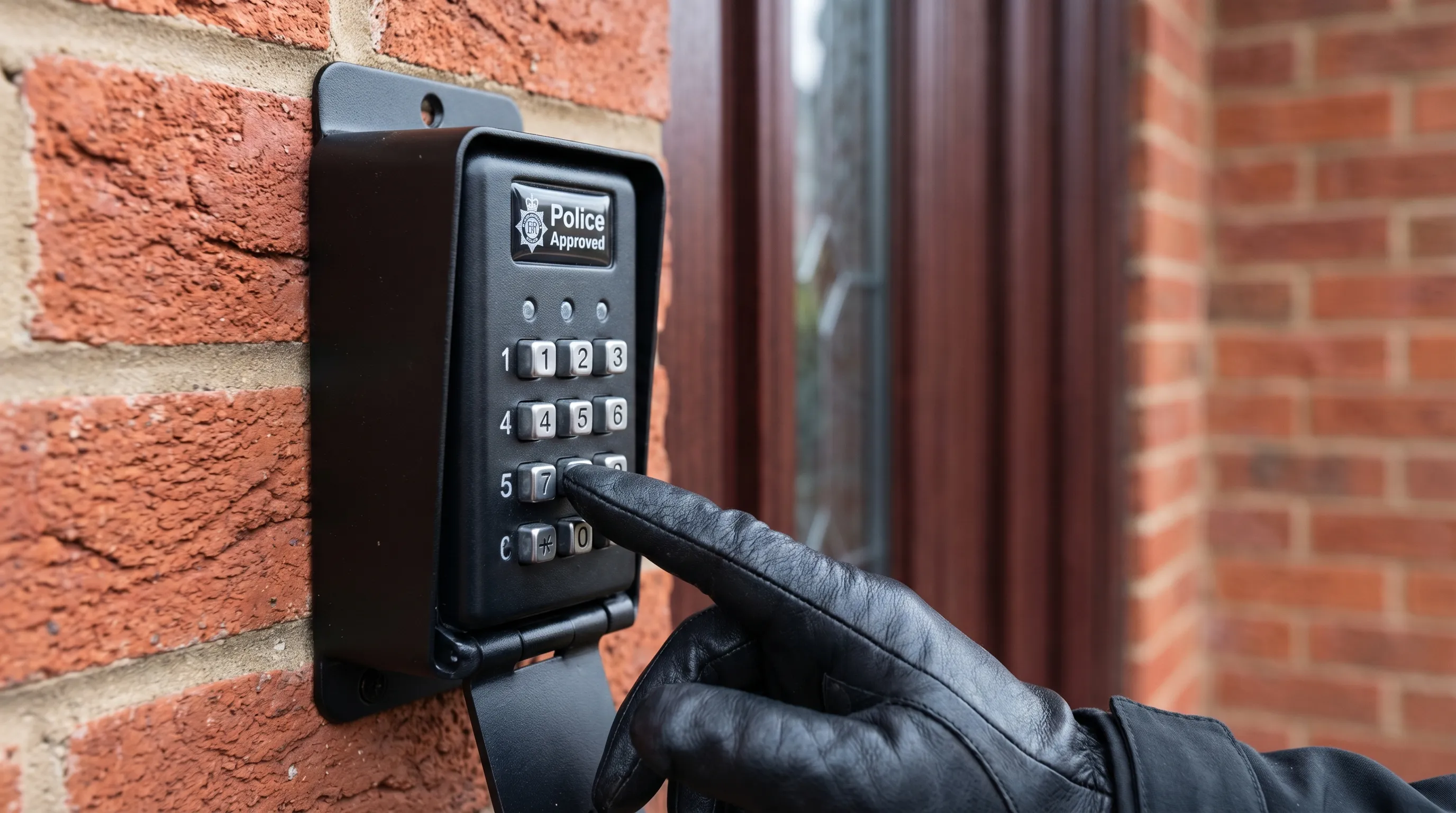
A key safe is the simplest prevention. It is a small, wall-mounted metal box that holds a spare key (or set of keys) secured by a combination code. You fix it to an outside wall near your front door, store a spare key inside, and if you are ever locked out, you enter the code and retrieve the key yourself.
No locksmith call-out. No broken window. No waiting in the rain.
How a Key Safe Works
A key safe is a reinforced metal box, typically around the size of a small paperback book, that is permanently fixed to a wall using long masonry bolts. It has a weatherproof cover over a combination dial or push-button keypad.
To store a key: open the safe using the code, place the key inside, close the safe, and scramble the code.
To retrieve the key: enter the code, open the safe, take the key. After use, return the key and scramble the code again.
The code can typically be changed at any time without tools, so you can update it whenever you want to revoke someone’s access.
Who Benefits Most From a Key Safe
- People who have been locked out before - if it has happened once, the odds of it happening again are high. A key safe eliminates the problem permanently.
- Elderly or vulnerable residents - carers, family members, and emergency services can access the property using the code without needing a physical key. Many care agencies require a key safe as a condition of service.
- Families with children - children lose keys. A key safe at home means a lost school-bag key is an inconvenience, not an emergency.
- Airbnb and holiday let hosts - a key safe allows guests to check in and out independently without a key handover.
- Anyone who does not want to give out spare keys - rather than distributing physical keys to neighbours or friends, give them the code. You can change it after each use. For more on the risks of spare keys, see our guide on what to do if someone has a copy of your key.
What to Look For
Police-Approved Ratings
Not all key safes offer meaningful security. Look for:
- Sold Secure Bronze, Silver, or Gold - independently tested ratings. Bronze is the minimum for a residential key safe.
- LPS 1175 SR1 - a loss prevention standard that tests resistance to attack using common tools.
- Secured by Design - the police-endorsed standard. A key safe with this rating has been independently assessed for security and is recommended by the police for home use.
Avoid the cheapest key safes on the market. A poorly made safe with a simple combination mechanism can be forced open in seconds, defeating the entire purpose.
Combination Type
- Push-button (mechanical) - the most common type. No batteries required. Typical combinations are 4 digits from a 10-button keypad, giving 10,000 possible combinations.
- Scroll wheel - a dial that you rotate to each digit. Slightly slower to operate but equally secure.
- Digital/electronic - battery-powered with more combination options and some offer Bluetooth access. More expensive and requires occasional battery changes.
For most residential uses, a mechanical push-button key safe is the best balance of security, reliability, and cost.
Mounting and Weather Resistance
- The safe must be bolted to a solid wall - not a fence, not a wooden panel, not a door frame. Masonry fixings into brick or concrete are essential.
- It should have a weatherproof cover to protect the keypad from rain, frost, and dirt. UK weather will quickly corrode an unprotected mechanism.
- It should be positioned discreetly - visible enough for authorised users to find, but not so prominent that it advertises the presence of a key. Inside a porch, on a side wall, or at a low level are common positions.
Installation
A key safe can be installed as a DIY project if you are comfortable with masonry drilling. You need:
- A masonry drill bit and hammer drill
- Wall plugs and the bolts supplied with the safe
- A spirit level
- Approximately 20 minutes
If you would prefer professional installation, a locksmith can fit a key safe quickly and ensure it is securely mounted. This is particularly worthwhile if the wall is cavity block, rendered, or otherwise non-standard.
Common Concerns
”Does a key safe reduce my home security?”
A properly rated key safe (Sold Secure or Secured by Design) does not meaningfully reduce security. The combination mechanism has thousands of possible codes, and the reinforced body resists forced entry. An intruder would find it far easier to attack the door lock itself than to crack a quality key safe.
A poorly rated or improperly installed key safe, on the other hand, is a genuine weakness. This is why the rating matters.
”Will it affect my insurance?”
Most insurers have no issue with a police-approved key safe. Some policies for higher-risk properties may specify requirements, so it is worth checking. The key is to choose a rated product - an unrated safe from a marketplace seller may not satisfy an insurer.
”What if someone sees me entering the code?”
This is a real concern. To mitigate it: shield the keypad with your body when entering the code (the same way you would cover a PIN at a cash machine), and change the code periodically. Some key safes also have a cover that conceals the keypad when not in use.
How Much Does a Key Safe Cost?
| Product | Typical Cost |
|---|---|
| Police-approved key safe (Sold Secure rated) | £25-£50 |
| Premium key safe (LPS 1175 rated) | £50-£100 |
| Professional installation | From £40 |
City Locksmith London
We supply and install police-approved key safes across London. If you have been locked out before and want to prevent it happening again, a key safe is the simplest and most cost-effective solution. Contact us to arrange installation.