
Signs Your Lock Has Been Tampered With
Why Tampering Often Goes Unnoticed
Not every attempted break-in involves a kicked-in door or a smashed window. Some of the most common burglary techniques - lock picking, bumping, and snapping - leave minimal visible evidence. A burglar who fails on a first attempt may plan to return later, and the only clue you will have is a subtle change in how your lock looks or feels.
Knowing what to look for means you can act before a failed attempt becomes a successful one.
7 Signs That Someone Has Interfered With Your Lock
1. Fresh Scratches Around the Keyhole
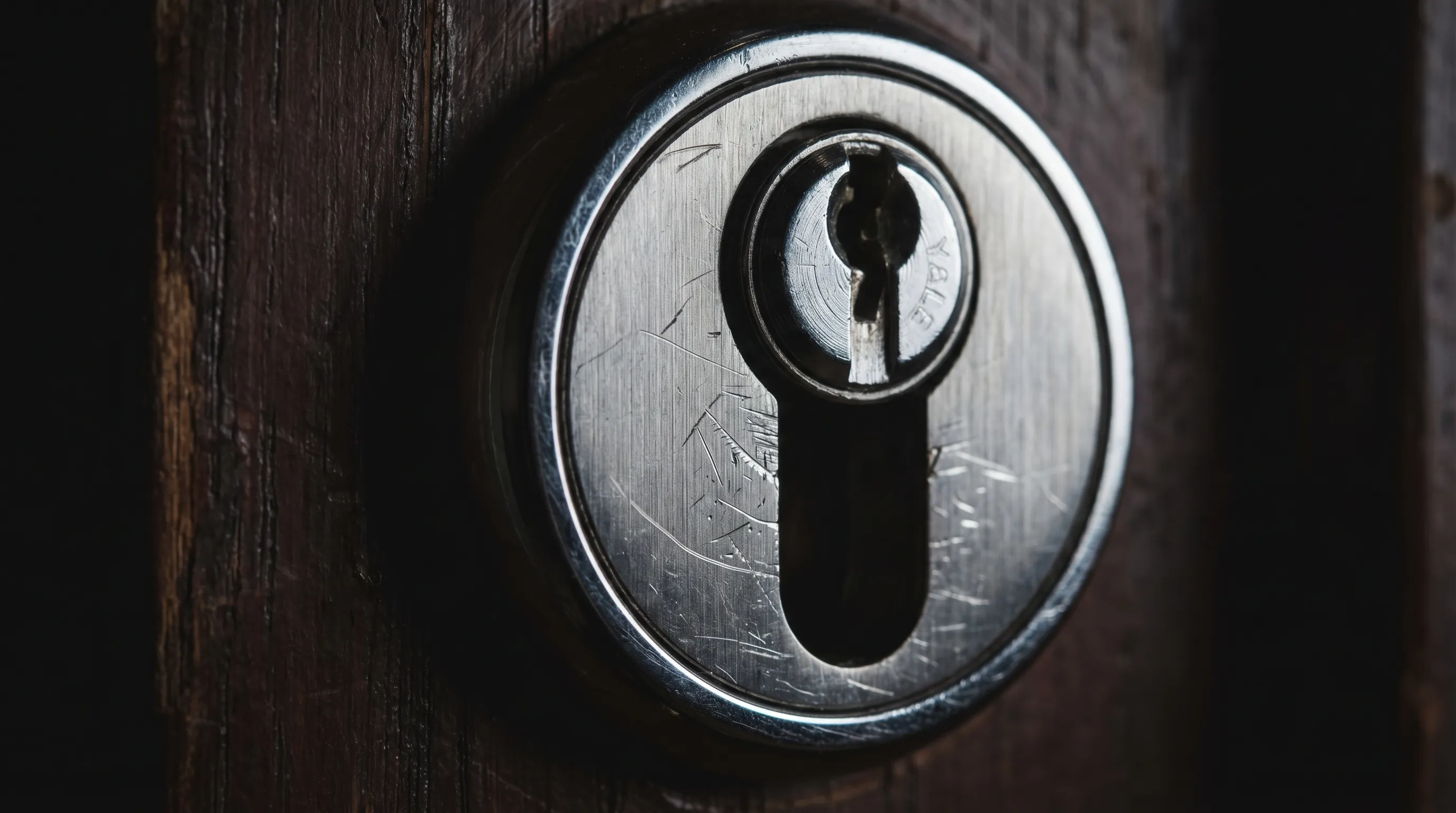
This is the most common indicator. Lock picking involves inserting thin metal tools into the keyway and manipulating the internal pins. These tools scrape against the edges of the keyhole, leaving fine, bright scratches on the metal surround.
Normal wear from daily key use creates scratches too, but there is a difference: key scratches tend to follow the same path (because you insert the key at roughly the same angle each time), while picking scratches appear in unusual positions - above, below, or to the sides of the keyway where a key would never go.
Look at the lock face in good light. If you see fresh, shiny marks that were not there before, particularly in areas your key does not touch, take it seriously.
2. The Key Feels Different When You Turn It
If your key suddenly requires more force than usual, catches at a point where it previously turned smoothly, or feels “gritty” inside the lock, the internal mechanism may have been disturbed. Lock bumping and picking both manipulate the pins inside the cylinder, and a failed attempt can leave pins slightly misaligned or damaged.
This is especially telling if the change happens overnight or while you were away. Locks do wear gradually over time, but a sudden change in feel without an obvious cause (cold weather, for example) is worth investigating.
3. Difficulty Inserting the Key
If you struggle to get the key into the keyhole - it will not slide in as far as it usually does, or something seems to be blocking it - there may be a foreign object inside. Attempted break-ins sometimes leave behind fragments of a broken pick tool, a snapped tension wrench, or debris from a failed manipulation attempt.
Do not force the key in. If something is blocking the keyway, forcing it can push the obstruction further in and damage the lock mechanism, making it harder to diagnose what happened.
4. Visible Damage to the Lock Body or Surround
Look for:
- Dents or deformation on the lock face or cylinder body - signs of a hammer or impact tool
- Drill marks - small, circular indentations or a hole in the cylinder face, indicating someone attempted to drill out the pins
- Bent or warped metal around the lock mounting - suggests someone tried to prise the lock away from the door
- Paint damage around the lock fixture - circular marks left by a lock being twisted or loosened and then re-tightened
Any visible physical damage should be treated as a confirmed tampering attempt, regardless of whether entry was gained.
5. The Lock or Door Feels Loose
If the lock body moves when you grip it, the cylinder rotates slightly when it should be fixed, or the door handle has more play than it used to, someone may have partially loosened the fixings. A loose cylinder is much easier to snap or remove quickly, making this a potential warning sign worth acting on.
Check the fixing screw on the edge of the door (for euro cylinders) and the screws holding the handle or escutcheon plates. If any are loose and you did not loosen them, something is wrong.
6. The Door Does Not Sit Properly in the Frame
If the door suddenly does not close as flush as it used to, or the latch does not engage without an extra push, the frame or strike plate may have been tampered with. Burglars sometimes work on the frame rather than the lock itself - widening the gap between door and frame to create enough room to slip the latch.
Check the strike plate for fresh tool marks, and look at the gap between door and frame for signs it has been forced or widened.
7. Marks on the Letterbox or Door Furniture
Some entry methods exploit the letterbox - using a tool inserted through the letterbox opening to reach the internal handle or latch. If you notice scratches inside the letterbox, marks on the back of the letter flap, or damage to the internal side of the door near the lock, this may be the technique that was attempted.
What to Do If You Suspect Tampering
Do Not Enter If You Think Someone Is Inside
If there are obvious signs of forced entry - a visibly damaged lock, a door that is ajar when it should be locked, or broken glass - do not go in. Call 999 and wait for the police.
If It Appears to Be a Failed Attempt
- Photograph everything before touching the lock. Close-up photos of scratches, damage, and tool marks are useful evidence.
- Report it to the police on 101 (non-emergency). Even a failed attempt should be reported - it establishes a record and may link to other incidents in the area.
- Call a locksmith to inspect the lock. A professional can tell you whether the lock has been compromised and whether it needs replacing. Our emergency locksmith service is available 24/7.
- Replace compromised locks immediately. A lock that has been partially picked, bumped, or drilled is weakened even if it still functions. Do not wait.
Upgrade Your Security
If your locks have been targeted, treat it as a prompt to review your overall door security:
- Fit anti-snap, anti-pick, anti-bump cylinders - these resist the most common manipulation techniques. See our guide on what is lock snapping and how to prevent it.
- Install a letterbox restrictor - prevents tools being inserted through the letter slot
- Add sash jammers - a secondary physical barrier that holds the door shut independently of the lock
- Consider a door viewer and chain - lets you check who is at the door without opening it fully
- Install exterior lighting - motion-activated lights deter opportunistic attempts
For a comprehensive overview of lock types and security ratings, see our guide to security door and window lock types in London.
Prevention Is Cheaper Than Repair
A lock inspection and upgrade costs far less than dealing with the aftermath of a break-in. If your locks are standard euro cylinders without anti-snap or anti-pick features, they are vulnerable to the techniques described above - whether or not anyone has attempted them yet.
City Locksmith London provides security assessments and lock upgrades across all of London. We carry high-security cylinders in the van and can upgrade your locks in a single visit. Contact us to arrange an inspection.