
Letterbox Security: How Burglars Exploit Your Letterbox
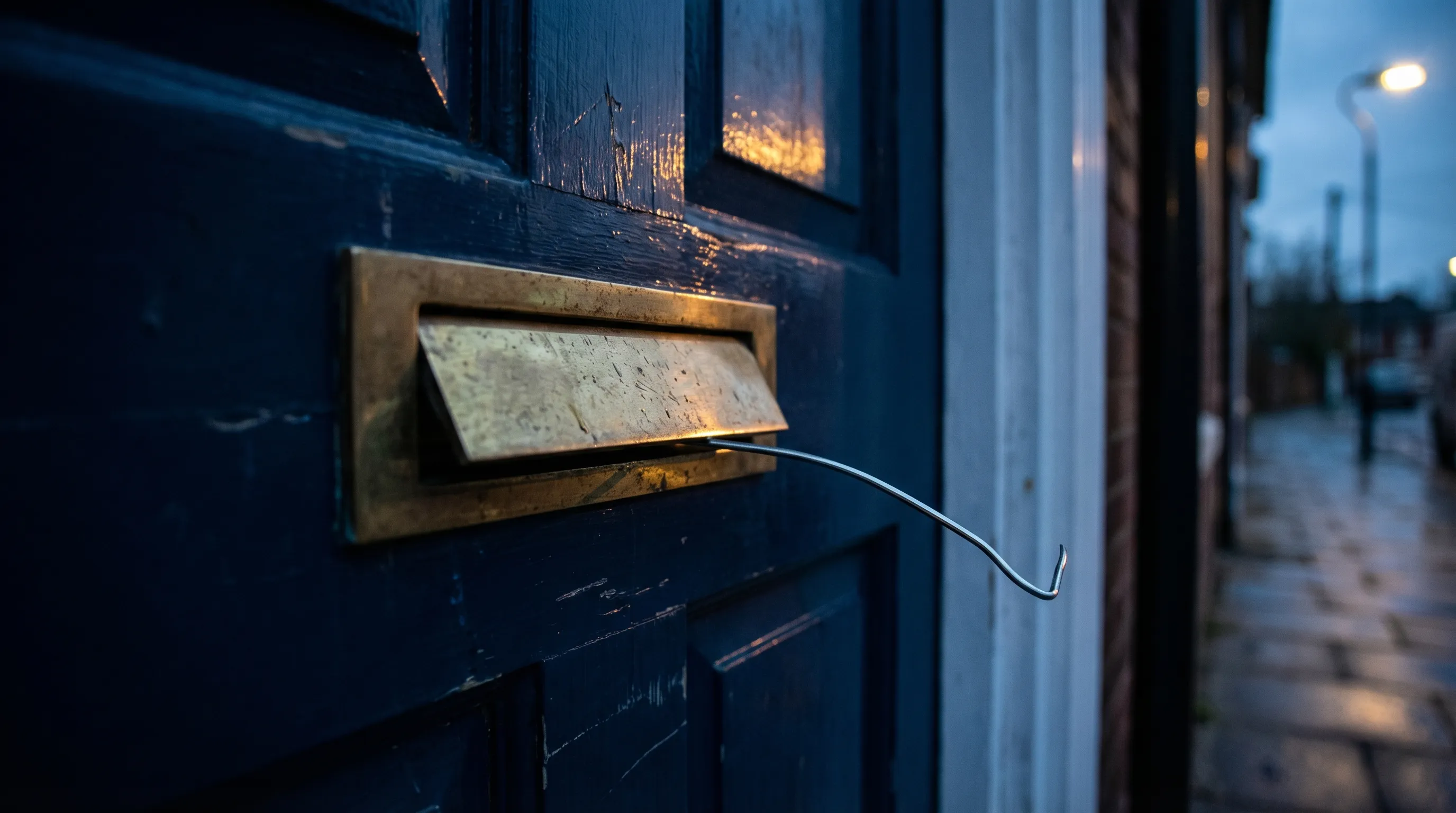
An Overlooked Vulnerability in Almost Every Front Door
Your front door might have a high-security lock, anti-snap cylinder, and reinforced frame. But if it also has a standard letterbox with no protection, you have left a gap that a burglar can exploit in under a minute.
Letterbox attacks are a well-documented method of entry, particularly common in terraced houses and flats in London where the letterbox is close to the door lock or handle. The method is simple, quiet, and leaves minimal evidence - which is why it is popular with opportunistic thieves.
How Letterbox Attacks Work
Key Fishing
The most common letterbox attack. The burglar opens the letter flap and uses a tool - often a length of wire with a hook, a telescopic magnet, or even a bent coat hanger - to reach inside and hook a set of keys that have been left near the door.
Keys left on a hall table, hanging on a hook by the door, or sitting on a shelf within arm’s reach of the letterbox are all vulnerable. Car keys are a particularly valuable target - stealing car keys through the letterbox is one of the most common methods of vehicle theft in London.
The entire process takes seconds and makes no noise. The burglar retrieves the keys, unlocks the door from the outside, walks in, takes what they want, and leaves. There is no forced entry, no damage, and often no obvious evidence until the homeowner notices items missing.
Handle Manipulation
Some letterboxes are positioned close enough to the internal door handle that a tool can be inserted through the letter slot and used to push down the handle, retracting the latch. If the door has only a latch (night latch) engaged and no deadbolt thrown, the door opens.
This is more common on older timber doors where the letterbox sits in the middle of the door, close to the lock. It is less effective on modern uPVC doors where the handle is typically positioned lower than the letterbox.
Lock Manipulation
In rare cases, a burglar will use a tool inserted through the letterbox to reach the thumb-turn on the inside of a euro cylinder. If the thumb-turn can be reached and turned, the deadbolt retracts and the door opens. This is why some security professionals recommend key-operated cylinders on both sides (no thumb-turn) for doors with letterboxes.
Arson
The most dangerous letterbox attack. Flammable liquid or material is pushed through the letterbox and ignited. This is not a burglary method - it is a deliberate attack, and it is the reason that letterbox restrictors and fireproof letterbox bags exist. While rare in the context of burglary, it is worth mentioning because the same physical countermeasures that prevent key fishing also provide fire protection.
How to Protect Your Letterbox
1. Install a Letterbox Restrictor
A letterbox restrictor (also called a letter cage, letterbox guard, or letter plate restrictor) is a metal cage or cowl fitted to the inside of the door behind the letterbox. It allows post to pass through but prevents anyone from reaching further inside the door.
There are two main types:
- Cage/basket type - a metal box that attaches behind the letterbox and collects the post. The opening is large enough for letters and small packages but too narrow for a hand or tool to reach through.
- Cowl/hood type - a curved metal deflector fitted behind the letter plate that directs post downward while blocking any upward or sideways reach.
Both are effective. The cage type is more common and typically costs £10-£25 for the part. Fitting takes 10-15 minutes with basic tools.
2. Move Your Keys
This is the simplest and most important step. Never leave keys within sight or reach of the letterbox:
- Do not hang keys on a hook near the front door
- Do not leave keys on a hall table or shelf
- Do not leave car keys in a bowl in the hallway
- Store keys in a drawer, cupboard, or room that is not accessible from the front door
If you currently leave keys near the door for convenience, find a new spot tonight. This single habit change prevents the most common letterbox attack.
3. Use a Deadbolt
If your door has a night latch (the kind that latches automatically when you close the door), always engage the deadbolt as well. A night latch alone can be defeated by handle manipulation through the letterbox. A thrown deadbolt cannot be retracted without the key.
On a uPVC door with a multipoint lock, make sure you lift the handle and turn the key every time you close the door, not just push it shut. The multipoint hooks only engage when you lift the handle. For more on how this works, see our guide to multipoint locks.
4. Consider a Thumb-Turn Guard or Key-Operated Cylinder
If your euro cylinder has a thumb-turn on the inside (a knob you twist instead of using a key), and the thumb-turn is within reach of the letterbox, consider either:
- Replacing the cylinder with a double-key cylinder (key operated from both sides) - more secure but less convenient for exiting
- Fitting a thumb-turn guard - a cover that prevents the thumb-turn being operated by a tool while still allowing finger operation
5. Fit a Letterbox Draught Excluder With Brush Seal
A brush seal behind the letter plate adds a physical barrier that makes it harder to insert tools or see inside. It also reduces draughts. These cost under £10 and are simple to fit.
Signs Your Letterbox May Have Been Targeted
- Scratches on the inside of the letter flap or door around the letterbox
- The letter flap has been bent or forced open wider than normal
- Marks on the internal door surface near the lock or handle
- Missing keys that were left near the door
For a full guide to recognising tampering, see our article on signs your lock has been tampered with.
City Locksmith London
We fit letterbox restrictors, upgrade cylinders, and install deadbolts across London. If you are concerned about letterbox security - or any aspect of your front door’s vulnerability - our residential locksmith service can assess and upgrade your door security in a single visit. Contact us.