
All You Need to Know About Lock Changing Service
Why Lock Changing Is One of the Most Important Security Steps You Can Take
Your home or business is only as secure as the locks protecting its entry points. A worn, outdated, or compromised lock may appear functional from the outside while providing far less protection than you realise. A professional lock changing service ensures your security hardware is working as it should - and that only the right people have access.
When Should You Change Your Locks?
Wear and Tear
Locks are mechanical devices that experience daily use. Over time, internal components wear, pins lose their precision, and cylinders become stiff. If your lock is noticeably harder to operate than it used to be, it is already compromised to some degree. Do not wait for it to fail completely.
Look out for these signs of wear:
- The key feels stiff or requires effort to turn
- The lock or handle feels loose or wobbly
- The bolt does not extend or retract smoothly
- You can see visible wear or damage on the cylinder face
Lost or Stolen Keys
If you cannot account for all copies of your keys, change the locks immediately. You have no way of knowing who has found a lost key or whether it has been copied. The cost of a lock change is trivial compared to the cost of a burglary.
Moving to a New Property
When you collect the keys to a new home, you have no visibility of how many copies exist or who currently holds them. Changing all exterior locks on the day you move in is one of the smartest security decisions you can make.
Security Upgrades
Lock technology advances continuously. If your locks are more than ten years old, they almost certainly lack modern protections such as anti-snap cylinders, anti-drill pins, and resistance to bump key attacks. Upgrading to a current-generation lock significantly improves your protection.
After a Break-In or Attempted Break-In
Any forced entry attempt - successful or not - may have weakened or damaged your locks. Replace affected locks immediately and have the door frame inspected for damage to the strike plate and frame timbers. If your property has been targeted, our emergency locksmith London service provides rapid response across the capital.
Upgrading to Smart Locks
Modern smart locks offer keyless entry, remote access control, and activity logs. If you are upgrading your home’s security technology, replacing older locks is a natural part of the process. Read our smart locks for a keyless home guide to explore your options.
Common Lock Types Available for Changing
Deadbolts
The most widely used lock type for residential properties. Available as single cylinder (key outside, thumb-turn inside) or double cylinder (key on both sides). Double cylinders are useful where there is glass near the lock but require careful consideration in case of fire. Look for BS 3621 certification.
Mortice Locks
Fitted within the door body itself, mortice locks offer excellent resistance to forced entry. Five-lever mortice deadlocks to British Standard are required by most home insurers and are the recommended choice for wooden exterior doors.
Cylinder Locks (Euro Cylinders)
Standard on uPVC and composite doors. The cylinder format makes replacement quick and simple. For genuine security, choose an anti-snap, anti-pick, anti-drill cylinder rated to TS007 3-star standard.
Smart Locks
Keyless entry systems that use PIN codes, fingerprints, or smartphone apps. Excellent for rental properties, shared access situations, or anyone who frequently needs to grant temporary access to others. Codes can be changed instantly without cutting new keys.
Electronic Keypad Locks
A practical choice for offices and commercial properties. Multiple user codes can be programmed and individual codes revoked when an employee leaves, removing the need to rekey the entire building. See our commercial locksmith London page for business security solutions.
Padlocks
High-security padlocks remain the appropriate solution for gates, storage units, and outbuildings. Choose closed-shackle designs (where less of the shackle is exposed to attack) from brands such as Abloy, Squire, or Mul-T-Lock for the best protection.
Choosing the Right Lock
When selecting a replacement lock, consider:
- Security rating - Look for locks certified to BS 3621 or TS007 3-star for maximum insurance compliance
- Match the security level to the door’s purpose - external doors need certified locks; interior doors need convenience
- Check your insurance policy - some insurers require specific lock standards; failing to comply may affect your cover
- Reputable brands - Established manufacturers such as Mul-T-Lock, Yale, and Ultion are well regarded in the UK
- Key control - patented key systems prevent unauthorised copying
- Do not prioritise aesthetics over function - a beautiful lock that fails is no lock at all
For a full breakdown of recommended lock types, see our security door and window lock types guide.
Tools Required for Lock Changing
If you are considering a DIY approach, you will need:
- Phillips and flat-head screwdrivers
- Tape measure
- Compatible replacement lock
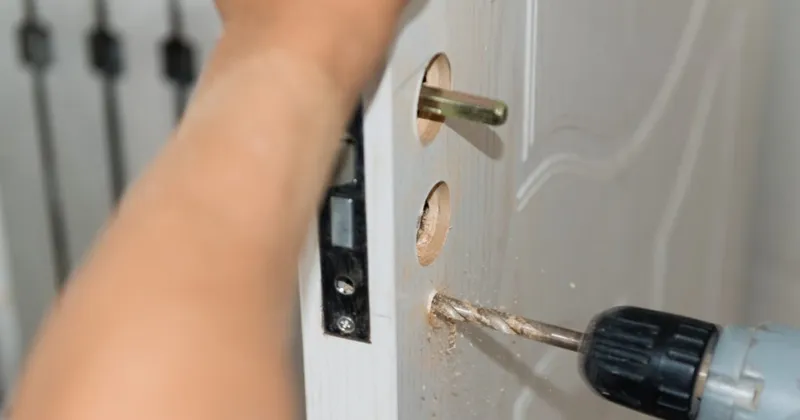
- Drill and drill bits (for new installations)
- Chisel and hammer (for mortice locks)
DIY vs Professional Lock Changing
It is tempting to treat a lock change as a straightforward DIY job, and for a simple like-for-like cylinder replacement on a wooden door, a competent DIYer can usually manage. However, professional fitting is recommended when:
- The door type is complex - uPVC, composite, and aluminium doors require precise fitting and the correct cylinder size
- The door frame needs attention - a poor strike plate fitting or weakened frame needs addressing alongside the new lock
- You are fitting a mortice lock for the first time - these require chiselling a recess into the door body
- You are fitting a smart lock - wiring, pairing, and configuration benefit from experience
- You want the work guaranteed - a professional locksmith stands behind their installation
A professional locksmith will also ensure the lock is correctly aligned, which is critical for both security and longevity.
The Lock Changing Process
A professional lock change follows these steps:
- Assessment - the locksmith examines the existing lock and door to identify the most suitable replacement. For euro cylinders, the overall length and offset from the fixing screw are measured precisely (e.g. 35/45mm)
- Removal - the old lock is removed cleanly, with care taken not to damage the door or frame
- Fitting - the new lock is installed, with the bolt and strike plate aligned precisely
- Testing - the locksmith tests the lock through multiple cycles and checks that it operates smoothly from both sides
- Key issuance - new keys are provided and the locksmith confirms the number of copies made
Understanding Lock Changing Costs
Costs vary based on:
- The type and quality of lock selected
- The complexity of the installation (like-for-like vs new type)
- Whether the door frame needs any remedial work
- Time of day - planned appointments during business hours cost less than emergency call-outs
As a general guide:
- Euro cylinder replacement: £50-£100 including parts
- Mortice lock replacement: £80-£150 including parts
- Smart lock installation: £100-£200 including parts
For a transparent breakdown of what you should expect to pay, see our locksmith price list.
Maintaining Your New Locks
Protect your investment with simple regular maintenance:
- Lubricate the keyway and bolt every six months using graphite powder or a silicone-based spray
- Clean the external face of the lock periodically with a soft, dry cloth
- Inspect annually for wear, loose screws, or any difficulty in operation
- Address problems early - a stiff lock is cheaper to fix than a failed one
For related advice, see our guide on when you need to replace your locks.
Book Your Lock Change
City Locksmith London provides professional lock change services for homes and businesses across London. We stock a full range of high-security locks and can advise on the best option for your specific door and requirements. For new installations, our door lock installation team covers all property types.